The birdhouse project is based around a Nistkasten from Vogelwarte Sempbach and upgraded to capture live video and sensor data using a Raspberry Pi. It publishes the stream via mediaMTX, and serves telemetry through this website. Extended live diagnostics are available for nerds.
The first iteration was an all-in-one Django app running directly on the Raspberry Pi. The second iteration moved web delivery to a dedicated server for better reliability and scale. The original project is archived at github.com/hacknus/birdhouse-monitor.
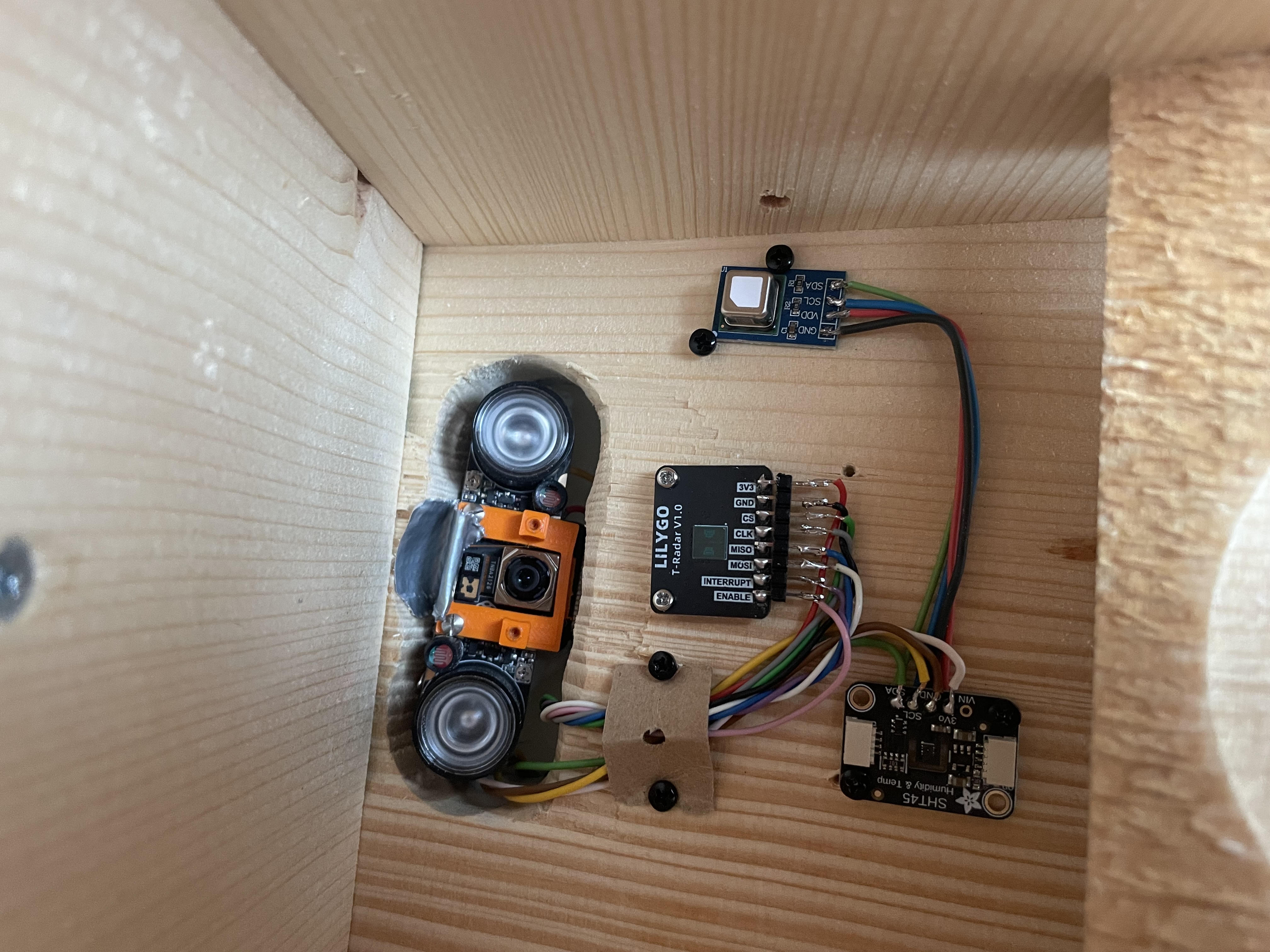
Figure 1. Camera and sensor placement inside the birdhouse.
Components
A Raspberry Pi 3B handles camera capture, GPIO sensors, and control commands. The Raspberry Pi is connected to the web-server via a TCP connection.
The following components are mounted in the birdhouse:
Camera: Raspberry Pi Camera Module v3, NoIR
Temperature/Humidity Sensor: Sensirion SHT41
CO2 Sensor: Sensirion SCD41
Luminosity Sensor: TSL2561
Radar: Acconeer A121
USB Microphone
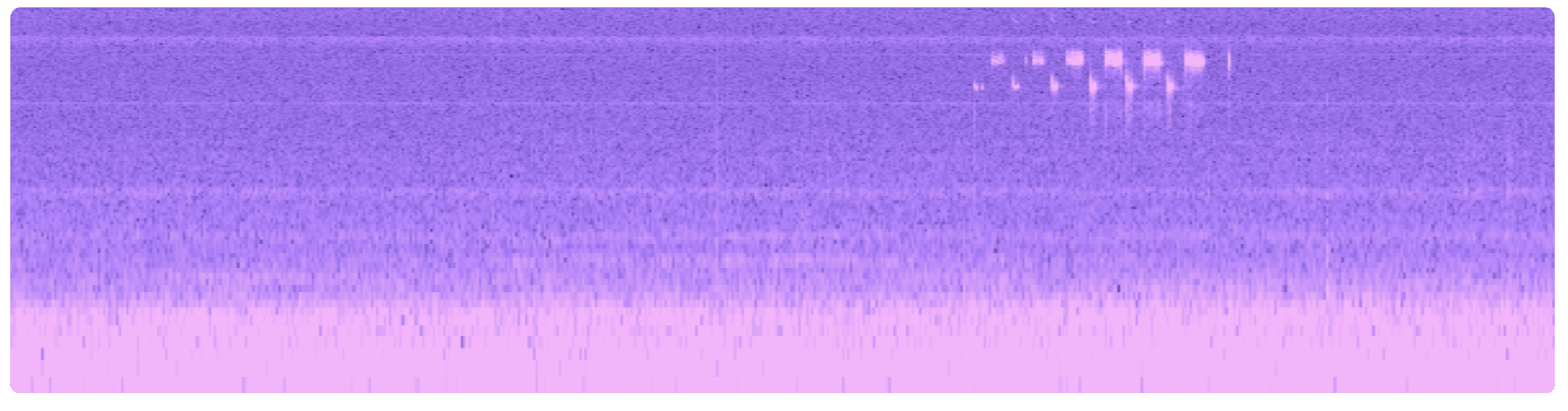
We included a microphone to analyse the sounds of different birds. A spectrogram is shown on the website, where y-axis corresponds to the frequency (logarithmic) and the x-axis to time (full window is about 20s).
If a plane flies overhead, the noise floor increases, sometimes the Doppler effect can be visible. Emergency vehicles and rain drops can also be detected.
Figure 2. Audio spectrogram showing the chirp of a male Great Tit.
The camera does not have an infrared filter and is thus able to take images during the night when the birdhouse is illuminated with IR LEDs. Birds are not disturbed by infrared light, since they can see better in the UV/blue part of the spectrum than in the red/IR [1, 2].
To detect motion in the birdhouse, a 60 GHz radar has been mounted on the ceiling. It is not only able to detect motion but also provides an activity score and breathing rate (experimental). 60 GHz radiation is not dangerous to birds as it does not penetrate more than micrometers into the tissue [3].
Streaming and Web Delivery
The camera stream from the Raspberry Pi is distributed through mediaMTX which exposes HLS/WebRTC stream paths.
Live metrics and spectrogram data are rendered in parallel through Grafana and WebSocket-driven visualizations.
The webserver and Raspberry Pi are connected through an encrypted Netbird VPN.
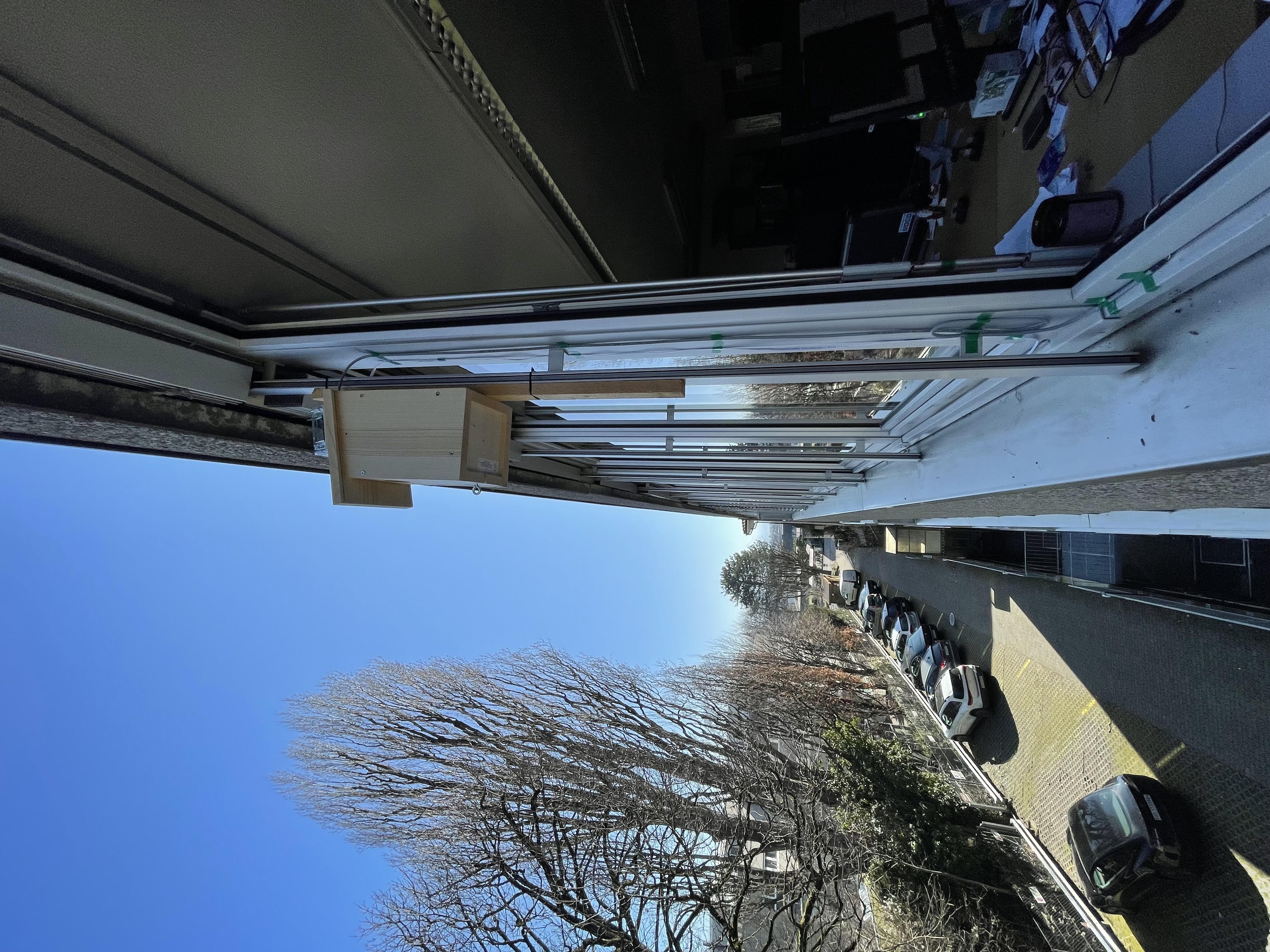
Figure 3. The birdhouse mounted outside of the office.
Figure 4. Software architecture of the birdhouse project.
References
Lind, O., Mitkus, M., Olsson, P., Kelber, A.; Ultraviolet vision in birds: the importance of transparent eye media. Proc Biol Sci 1 January 2014; 281 (1774): 20132209. https://doi.org/10.1098/rspb.2013.2209
Chen, D. M., Goldsmith, T. H. Four spectral classes of cone in the retinas of birds. J Comp Physiol A. 1986 Oct;159(4):473-9. https://doi.org/10.1007/BF00604167
Adekola, S.A., Amusa, K.A. & Biowei, G. Impact of 5G mmWave radiation on human tissue using skin, cornea (eye) and enamel (tooth) as study candidates. J. Eng. Appl. Sci. 72, 51 (2025). https://doi.org/10.1186/s44147-025-00617-9